


Top 7 Invoice Factoring Companies for CPG Founders in 2026
If you sell into major retailers or distributors, your cash is often trapped in 30–90 day payment terms while you still need to buy ingredients, fund production runs, and ship the next PO. Invoice factoring can bridge that gap by turning approved invoices into cash within days—without taking on balance sheet debt.
We evaluated providers on advance rates, speed, contract flexibility, integrations, non-recourse options, and cost to help CPG and ecommerce founders pick the right partner for their workflow and growth plans.
Disclosure: Spring Cash is included as a provider in this list.
Top picks at a glance
- Spring Cash — CPG-first, flexible invoice advances without blanket liens; fast funding up to $1M per invoice
- eCapital — High advances (up to ~92%) and same-day funding; capacity for large invoices
- Riviera Finance — Strong non-recourse options and willingness to work with slow-pay accounts
- Breakout Capital — Hybrid factor + working capital with startup-friendly flexibility
- FundThrough — Software-driven, up to 100% advance and robust accounting integrations
- BlueVine — Digital-native experience, quick approvals, and transparent weekly pricing
- altLINE (Southern Bank) — Bank-backed stability with fees starting near ~0.5% for qualified invoices
Comparison table (quick scan)
Spring Cash
- Best for: CPG + ecommerce founders
- Typical advance: Up to $1M per invoice (amount)
- Funding speed: Often 24–48 hours
- Notable strengths: No blanket liens, retail-aware underwriting, flexible invoice-based advances
eCapital
- Best for: Large invoices + scaling distribution
- Typical advance: Up to ~92%
- Funding speed: Often same-day
- Notable strengths: High advances, large capacity, portal + reporting
Riviera Finance
- Best for: Non-recourse options + slow-pay tolerance
- Typical advance: Up to ~95%
- Funding speed: As fast as ~24 hours
- Notable strengths: Non-recourse structures, flexibility with slow-pay accounts
Breakout Capital
- Best for: Hybrid needs (AR + top-up working capital)
- Typical advance: Up to ~95%
- Funding speed: Competitive (varies by deal)
- Notable strengths: Factor + working capital blend, flexible structures, helpful for seasonality
FundThrough
- Best for: Automation + accounting integrations
- Typical advance: Up to 100% (eligible invoices)
- Funding speed: Fast decisions / software-driven
- Notable strengths: Deep accounting integrations, no long-term contracts, streamlined reconciliation
BlueVine
- Best for: Self-serve experience + steady flow of small/mid invoices
- Typical advance: Up to ~90%
- Funding speed: Rapid approvals
- Notable strengths: Clean dashboard, predictable weekly pricing (often around ~0.25%, depending on qualification)
altLINE (Southern Bank)
- Best for: Bank-backed factoring + cost-conscious founders
- Typical advance: Not specified (deal-dependent)
- Funding speed: Not specified (deal-dependent)
- Notable strengths: Bank-backed underwriting, rate transparency, fees starting near ~0.5% for qualified invoices
Note: Figures above reflect what’s stated in the draft and can vary by debtor credit, invoice size, concentration, and contract structure. Always request a written term sheet.
What is invoice factoring (and is it a loan)?
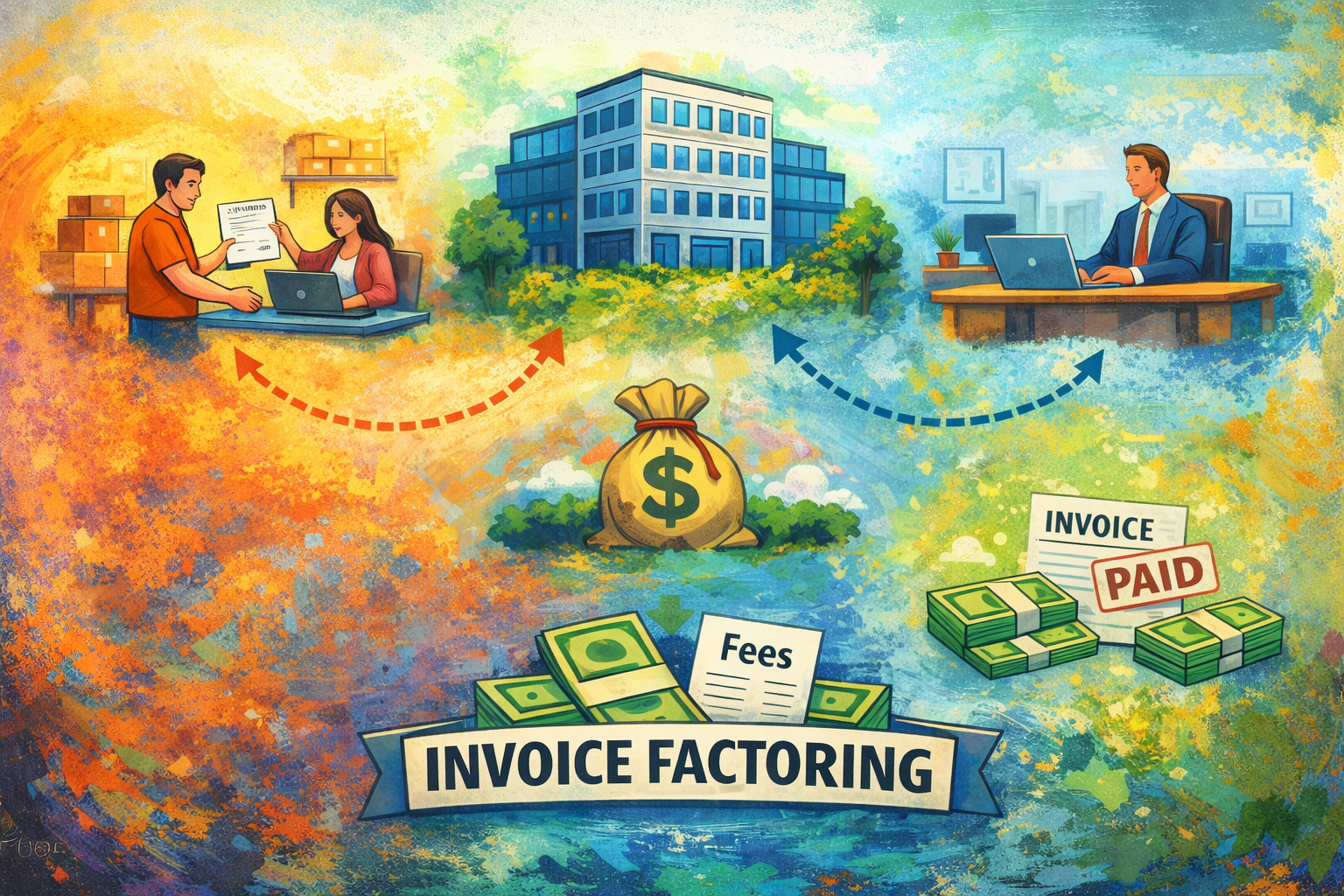
Invoice factoring (also called accounts receivable financing) lets brands sell unpaid invoices to a factoring company for immediate cash—typically 80–100% of invoice value—instead of waiting 30–90 days for payment. The factor then collects directly from your customer.
This is not a loan: you’re selling an asset (accounts receivable), not adding balance sheet debt. This can be useful when you want to scale without piling on liabilities.
Founders will also hear terms like invoice advance and working capital—in practice, these often refer to unlocking cash tied up in approved invoices so you can operate and grow.
Why use invoice factoring for your CPG business?
Retail and distributor payment cycles mean you front cash for production long before you get paid. Factoring provides working capital to:
- Buy ingredients / raw materials
- Fund production runs
- Meet payroll
- Cover fulfillment and freight
- Prepare for seasonal demand
Many factors accept invoices to major retailers and may offer high advances (often 95–100% for strong credits) so you can keep moving even as receivables age.
Common CPG use cases
- Ramp-up before a big retailer launch (large production run)
- Managing payroll + fulfillment between wholesale shipments
- Smoothing cash flow during growth spurts when POs outpace your cash conversion cycle
How invoice factoring works (step-by-step)
- Submit invoice(s) after shipment/acceptance
- Receive an advance (typically 80–100%), often within 24–48 hours for approved invoices
- The factor handles collections from your retailer/distributor customer
- When your customer pays, you receive the remaining balance minus the factoring fee
Key terms to know
- Advance rate: % of the invoice paid upfront
- Discount fee (factoring fee): fee charged (often quoted for the first 30 days and increases as the invoice ages)
Modern factoring platforms can integrate with accounting/ERP so invoice sync and reconciliation require minimal manual work.
The Top 7 invoice factoring companies (2026)
1) Spring Cash
Spring Cash is built for CPG and ecommerce founders. We advance against specific invoices without blanket liens, fund quickly (often in 24–48 hours), and align with retail realities like 30–90 day terms. Founders can access flexible, invoice-based funding up to $1M per invoice with card or ACH repayment and instant pre-approval.
Fit: CPG brands that want retail-aware funding without blanket liens, plus speed and flexibility.
Learn more: Spring Cash
2) eCapital
For scaling brands with large invoices, eCapital offers high advance rates (often up to ~92%), same-day funding, and capacity into the tens of millions—useful when distribution expands quickly and PO sizes increase. It’s positioned for small and mid-sized businesses but can handle enterprise-level invoice volumes, with a portal-driven experience and solid reporting.
Fit: Brands ramping production/distribution who need a robust partner for larger invoices.
3) Riviera Finance
Riviera stands out for non-recourse factoring (where the factor absorbs qualifying credit risk) and flexibility with slow-pay customers—a rarity among competitors. Funding can arrive within ~24 hours, and advance rates can reach up to ~95% on strong invoices.
Fit: Founders selling to many accounts with varied credit quality who want added protection.
4) Breakout Capital
Breakout Capital offers FactorAdvantage and hybrid working capital products that can complement or extend traditional factoring—useful for startups and inventory-heavy operators with uneven cash cycles. Expect competitive advance rates (up to ~95%) and credit lines up to around $10M, with flexible payment schedules and add-on features that can smooth seasonality.
Fit: Early-stage or fast-growing brands that need both receivables funding and flexible top-up capital.
5) FundThrough
FundThrough is software-forward with deep accounting integrations and no long-term contracts, and is known for offering up to 100% advances on eligible invoices. The platform aims to streamline the “raise on invoice, reconcile on payment” loop so teams spend less time on admin.
Fit: Tech-savvy teams that want automation, fast decisions, and per-invoice flexibility.
6) BlueVine
BlueVine caters to digital-native brands that value online control and predictable pricing. Expect rapid approvals, a clean dashboard, and advance rates up to ~90%, with transparent weekly fees often around ~0.25% depending on qualifications.
Fit: Brands with a steady flow of small-to-mid invoices that want a streamlined, self-serve flow.
7) altLINE (Southern Bank)
altLINE offers bank-backed stability, published rate transparency, and factoring fees that can start as low as ~0.5% for the first 30 days (qualified deals), increasing thereafter. That can drive meaningful savings for established brands with strong retailer invoices and predictable payers.
Fit: Cost-conscious founders who prioritize low fees and bank-grade underwriting.
Comparing advance rates, fees, and funding speed
Typical market ranges (directional):
- Advance rates: commonly 80–100%
- Fees: often roughly 0.75–5% for the first 30 days
- Costs generally rise if invoices age longer (and vary based on debtor credit, invoice size, concentration, and contract structure)
Note: Ranges shown are directional and not binding offers. Always request an itemized term sheet for your invoices and debtors.
Should you use invoice factoring for wholesale purchase orders?
Use factoring for post-shipment, approved invoices—not to fund the purchase order itself. If you need capital before production or shipment, consider:
- Purchase order financing (pre-shipment)
- Inventory loans (stock-heavy businesses)
- Asset-based lines of credit (broader working capital)
Discount fees can compound if your buyer’s cycle is long or payments slip, so model timing carefully.
Good fits for factoring
- You shipped to Costco/Target/UNFI, the invoice is approved, and you want cash now
- You have repeat orders with predictable payment behavior and want to recycle cash faster
Consider alternatives when
- You need to buy inputs before production
- Payment timing is uncertain or highly seasonal beyond your contract window
Typical fees and hidden costs to watch
Core costs and terms
- Factoring discount fee: charged on invoice face value; often quoted for first 30 days, stepping up after
- Advance rate: upfront % you receive
- Add-on costs: ACH/wire fees, platform/service fees, due diligence/origination charges, non-recourse premiums, lockbox fees, incremental late fees if invoices age past initial period
Across the market, rates commonly range ~1–5% for the first 30 days, with advance rates up to 100% on select invoices. Non-recourse typically costs more, and fees increase as invoices age.
Always request:
- An itemized fee sheet
- The exact step-up schedule after 30 / 45 / 60+ days
- A clear explanation of deductions, chargebacks, and dispute handling
How to choose the best invoice factoring option for your CPG brand
- Define your use case: invoice volume, average size, debtor mix, and duration needed
- Shortlist by fit: advance rate, non-recourse availability, contract flexibility, concentration limits, max exposure
- Demand transparency: full fee schedule + aging step-ups + all add-ons
- Test integrations: verify invoice sync + remittance reconciliation with your accounting stack
- Consider specialization: retail/CPG expertise, startup-friendly underwriting, ability to scale as POs grow
Pro tip: Confirm retailer approval status, delivery receipts/EDI, and any deductions (promos, chargebacks) before you factor.
Frequently asked questions (FAQ)
Is invoice factoring suitable for early-stage CPG brands?
It works best once you have established retail relationships and consistent receivables. Very early-stage brands may be better served by equity or alternative financing until traction builds.
What’s the difference between recourse and non-recourse factoring?
- Recourse: you must repurchase/cover invoices if the debtor doesn’t pay
- Non-recourse: approved credit risk transfers to the factor (typically for a higher fee)
How quickly can I get funded?
Many providers fund within 24–48 hours after approval, making factoring one of the faster ways to unlock working capital from invoices.
Can factoring affect customer relationships?
Reputable factors confirm and collect professionally; most retailers are accustomed to assignment notices and standard remittance instructions.
What alternatives exist to factoring?
Consider purchase order financing (pre-shipment), inventory loans, and asset-based lines of credit for broader working capital.
